

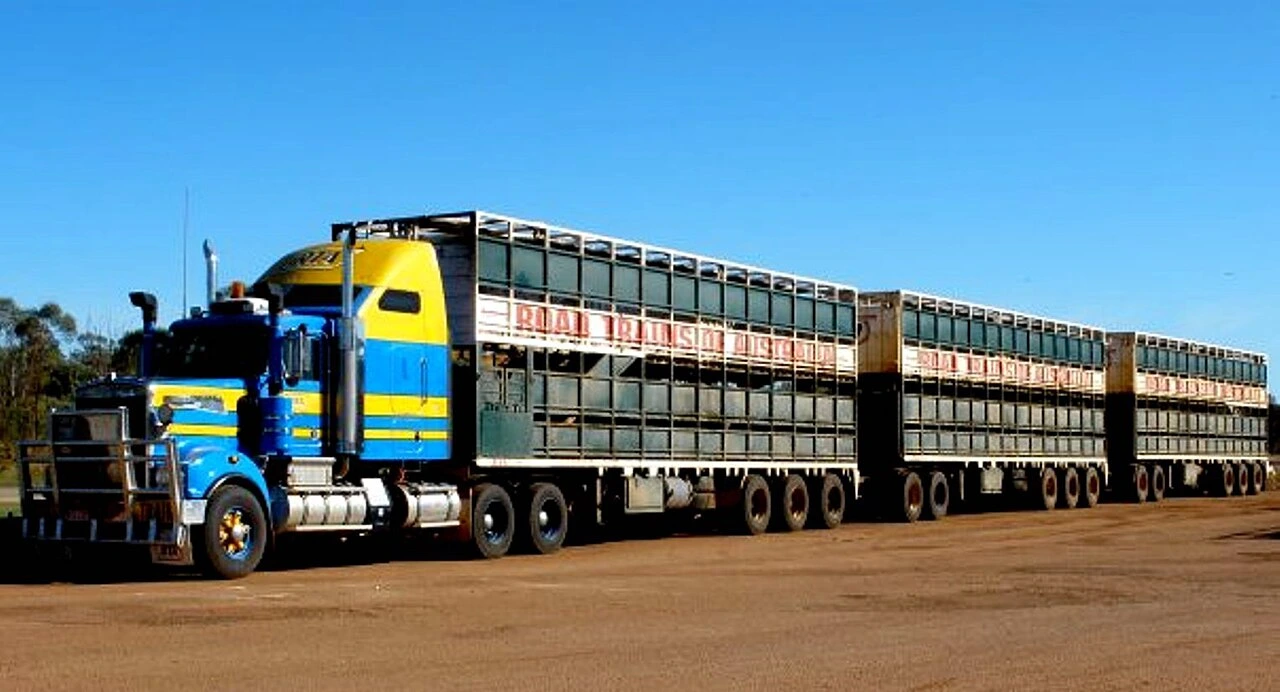
A road train is not just a long truck. It is Australia’s answer to a country where the next town can sit 300 kilometres down the road. These combinations reach lengths of up to 53. 5 meters – and they’re almost 200 tons when fully loaded – numbers nowhere else are allowed on a public road. Western Star Trucks pulling triple trailers move fuel, ore, and cattle across the Northern Territory, Western Australia, South Australia, and outback Queensland every single day. One prime mover, three or four trailers, one driver managing all of it for hours at a stretch. That is not a small ask of any truck.
Just How Big Is a Road Train, Really?
Size depends entirely on the type, and the difference between them is bigger than most people picture.
| Road Train Type | Maximum Length | Typical Routes |
| Type 1 (Double) | Up to 36.5 metres | Standard outback freight corridors |
| Type 2 (Triple) | Up to 53.5 metres | Gazetted routes across NT, WA, SA, QLD |
| AB-Quad | Around 60 metres, permit only | Remote mining and resource corridors |
A Type 2 triple alone is longer than most suburban streets. Try picturing that on a two-lane highway at dusk, with a car behind it trying to find a safe moment to pass.
Why Australia Allows What No Other Country Does
Distance explains it. Vast stretches of outback with almost nobody living in between make a single long combination far more efficient than dozens of smaller trucks running the same route. Access is not free for all though. Routes are gazetted and managed through permits, handled by the National Heavy Vehicle Regulator in most states and directly by state agencies in Western Australia and the Northern Territory. Drive outside an approved route with a road train and that is an immediate problem.
What a Road Train Actually Carries
The idea goes back to the 1930s and 1940s, when government-run road trains hauled freight into the Northern Territory, replacing the camel trains that had crossed the desert since the 1800s. Today it is fuel heading to remote communities, ore coming out of mining regions, and cattle moving from outback stations to processing plants. General freight makes up a share too, filling trailers that would otherwise run back empty across hundreds of kilometres of nothing. Triple road trains are really the backbone here, running fixed routes all over western NSW, western Queensland, South Australia, Western Australia, and the Northern Territory each and every day. Remove them from the equation – and the very same cargo will require many more trucks and a whole lot more drivers just to shift the exact same amount of weight.
The Driving Skill Nobody Talks About
Overtaking a vehicle longer than 50 metres takes real planning, not a quick glance and a gap in traffic. Drivers plan fuel stops, rest breaks, and road conditions well ahead of time, because stopping a loaded road train is nothing like stopping a car. It is also why road train driving sits in its own licence category, separate from standard heavy vehicle qualifications.
What the Prime Mover Needs to Pull This Much Weight
None of this works without a prime mover built for the job specifically, not just a truck that happens to be big.
- High-torque Detroit or Cummins engines built for sustained pulling, not short bursts of speed
- A reinforced chassis and axles rated for combinations up to 200 tonnes
- Turntable and coupling setups engineered for triple and quad trailer configurations
- A 72 inch Stratosphere sleeper so one driver can cover huge distances safely
- Active Brake Assist and side guard assist, critical on a vehicle this long
