

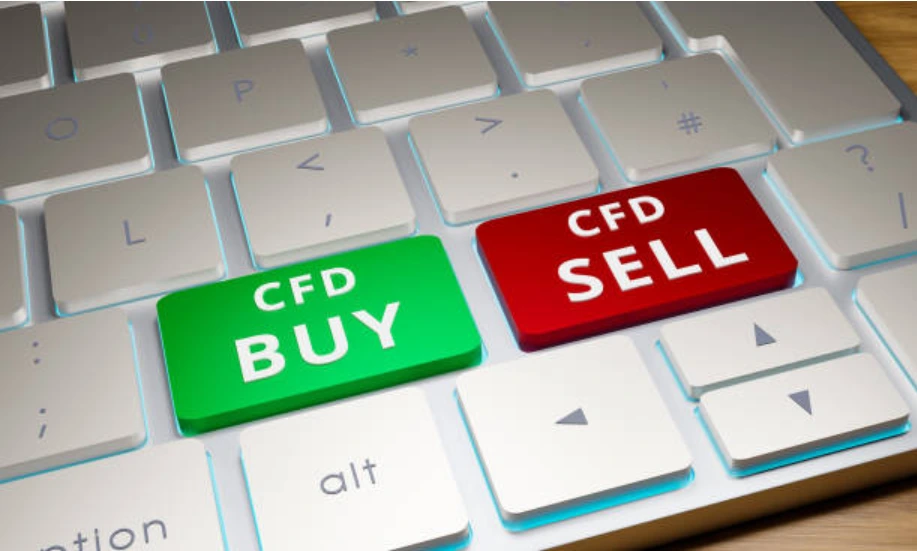
CFDs create exposure to an asset’s price without transferring ownership of the underlying instrument. That structure can add flexibility, but leverage, margin and financing costs can also magnify risk, making total exposure more important than the initial deposit alone.
Why does market exposure not always mean ownership?
Before looking at leverage, margin or trading costs, it helps to answer a basic question: What is CFD trading? A contract for difference, or CFD, is a derivative that tracks the price movement of an underlying market without giving the holder ownership of the asset itself. The outcome depends on the difference between the price when the position is opened and when it is closed.
The underlying asset might be a share, index, currency pair or commodity, but the CFD holder does not own it directly. Instead, the contract tracks its price movement. This matters because the rights and risks of ownership differ from those attached to a derivative position.
How is profit or loss determined?
A CFD position can generally be opened in either direction. A long position is based on the expectation that the underlying price will rise, while a short position is based on the expectation that it will fall.
The outcome depends on how far the market moves between entry and exit, together with position size and associated costs. A small adverse move can become significant when leverage is involved, so the instrument is better understood as a pricing contract than as a shortcut to market returns.
Why does leverage change the risk equation?
CFDs are commonly traded on margin. Only a fraction of the position’s full value may need to be deposited initially, while gains and losses are calculated on the larger market exposure.
The gap between deposit and exposure is central to understanding risk. A position may appear small when judged by the cash committed even though the economic exposure is several times larger. The way leveraged products can amplify both positive and negative market moves illustrates why total exposure should be assessed before a position is opened.
Which costs can affect the final result?
Price movement is only one part of a CFD trade. Depending on the instrument and holding period, the final result can also be influenced by:
- the spread between the buy and sell price;
- overnight financing charges;
- currency-conversion costs;
- commissions or other transaction fees;
- changes in margin requirements.
Financing costs matter particularly when a leveraged position remains open for longer periods. Because overnight fees can add to the cost of holding CFDs over time, the intended holding period is an important part of the decision rather than an afterthought.
How are margin and total exposure different?
Margin is the amount required to open or maintain a leveraged position. Total exposure is the full market value to which the position is linked.
Confusing the two can distort the perception of risk. If a relatively small margin controls a much larger exposure, a modest percentage change in the underlying market can have a much larger effect on the capital committed.
This is also why volatile conditions deserve attention. A position that appears manageable under normal conditions may require more capital if prices move sharply or liquidity deteriorates.
What should be defined before a position is opened?
A structured process focuses on risk before direction. Several questions help define the framework:
- What is the full market exposure?
- How much capital can be lost without disrupting other financial goals?
- Which market move would invalidate the original reasoning?
- How long is the position expected to remain open?
- Which costs apply over that period?
- How liquid is the underlying market?
These questions do not predict the market. They make the consequences of being wrong easier to understand before capital is committed.
What is the key lesson?
Key takeaway: CFDs are derivative contracts that provide exposure to price movements without ownership of the underlying asset. Margin can make positions appear smaller than the market exposure they represent, while leverage can amplify losses as well as gains.
Understanding the relationship between margin, total exposure, holding costs and price movement is therefore more useful than focusing on the initial deposit alone. A CFD does not make market direction easier to predict; it changes the structure through which that market risk is taken.
