

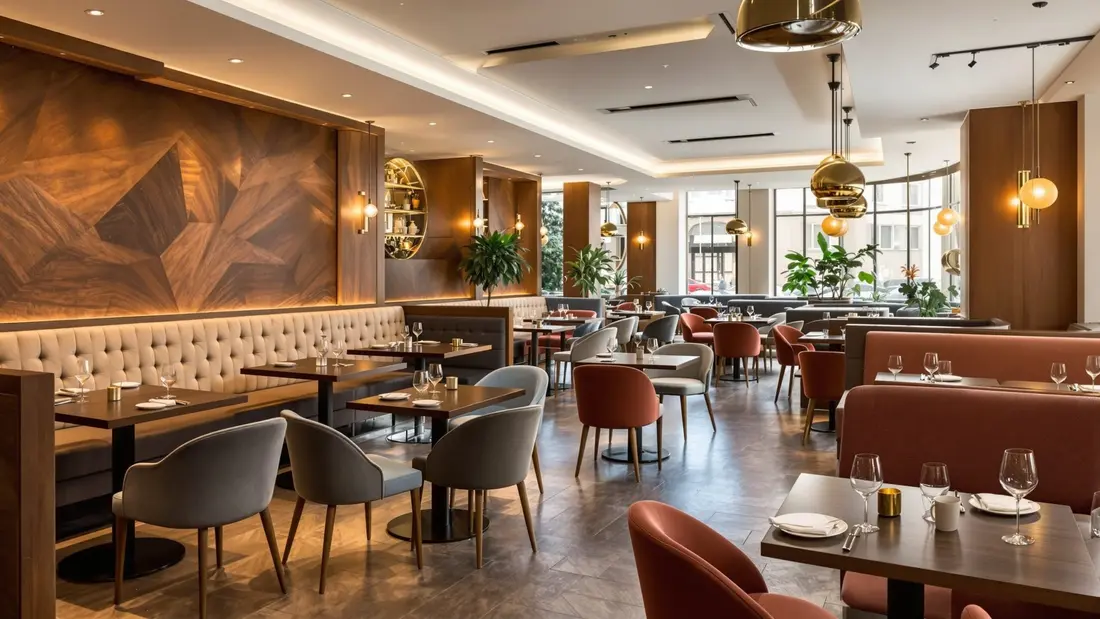
The departure never happens at the door. It happens twenty minutes earlier, invisibly and without ceremony, somewhere between the entree and the moment someone at the table says “should we get the check?” A back that has quietly given up on the chair. A table that rocked one time too many under a resting elbow. The guest is still seated, still smiling, and already, in every way that matters, gone.
Every hospitality business lives or dies on the gap between those two departures, the inner one and the physical one, because everything profitable happens inside it: dessert, the second bottle, the lingering conversation that turns a dinner into a habit. Owners who understand this buy commercial restaurant furniture as retention infrastructure, built to keep the inner departure as late as possible. The ones who don’t are paying for the gap without ever seeing the invoice.
The Silent Exit Has a Timeline
Discomfort has a schedule that the body adheres to without ever asking its owner’s permission. Any seat will do for the first twenty minutes; novelty, appetite, and conversation carry everything between them. After around forty minutes, the unsupported muscles begin their muted protest. By seventy, the complaint is a negotiation, and the negotiation always ends the same way: an internal vote to leave, signed off before anyone reaches for a coat.
Watch a dining room with this chronology in mind and the pattern is nearly visible. The tightening postures at the hour mark. The looks toward servers. The checks requested in clusters from the least comfortable sections. No one complains. Bodies transact this below the level of words, for complaining involves noticing.
What the Gap Contains
Price the interval between inner and outer departure and the stakes clarify. The final third of a relaxed visit carries the profit-dense orders: coffees, desserts, and the round nobody needed but everybody wanted. It carries the conversations that attach memory to place. And it carries the decision, made in comfort’s afterglow, to come back.
- A visit cut twenty minutes short forfeits the check’s richest portion.
- Memories anchor in the lingering, and the lingering never happened.
- The rebooking impulse forms at minute ninety, in seats that permit minute ninety.
The whole customer experience discipline exists to manage moments like these, and hospitality’s version sits on four legs.
The Reviews Never Name the Chair
Here’s what makes the cost so hard to trace: the language guests use afterward. Nobody writes “the seating fatigued my lumbar region at minute fifty.” They write “food was good but we didn’t love the vibe,” or “nice place, wouldn’t rush back.” The atmosphere takes the blame, vague and unfixable, while the actual culprit stands in rows, screwed together with visible optimism.
Owners chase the phantom instead: new playlists, new lighting, a menu redesign. The reviews soften slightly and the early departures continue, because the body’s verdict was never about any of it. Meanwhile the fix stands in the storeroom catalog, priced plainly, waiting for someone to interrogate the right suspect.
Comfort Is a Compounding Asset
Reverse the frame and the economics turn friendly. A room that holds guests gently past the ninety-minute mark doesn’t just win one larger check; it wins the return visit, and the return visit’s returns. Regulars are manufactured in comfortable seats, one unhurried evening at a time, and a venue’s regulars are its margin.
The physical requirements are unglamorous, well documented, and known to every commercial supplier: supportive backs, honest padding, tables that never wobble, and spacing generous enough to let a body fully settle. Commercial-grade product delivers them for a decade at a time, which converts a one-time purchase into ten years of extended evenings.
The Audit That Takes One Dinner
Any owner can measure their own gap with one simple exercise: eat one full, slow meal in the worst seat in the room. Not a tasting, a true ninety-minute meal, phone away. The body files its report at the usual checkpoints, and by dessert the improvement list has written itself.
Then perform the math the review sites will never do: minutes lost per visit, times covers per night, times margin per minute of linger. The figure that appears is the unseen rent being paid on every uncomfortable seat, and it makes mending them look cheap.
Keeping People All the Way to Goodbye
There’s a version of every restaurant where the two departures coincide: guests leave when they actually want to leave, reluctantly, later than planned, already discussing the next visit. That version is purchasable. It costs exactly the difference between furniture bought for looks and furniture built for bodies.
People leave long before they go, when the room gives them reason to. Take the reason away, and the goodbyes get later, warmer, and more likely to mean see you soon, which is, in the end, the only farewell hospitality was ever trying to earn. The story every dining room publishes nightly has two possible endings, and the difference between them was upholstered, priced, and sitting in a catalog all along. Every story needs a headline, and dining rooms write theirs in furniture: the comfortable room headlines welcome, the failing room headlines neglect, and readers decide fast.
