

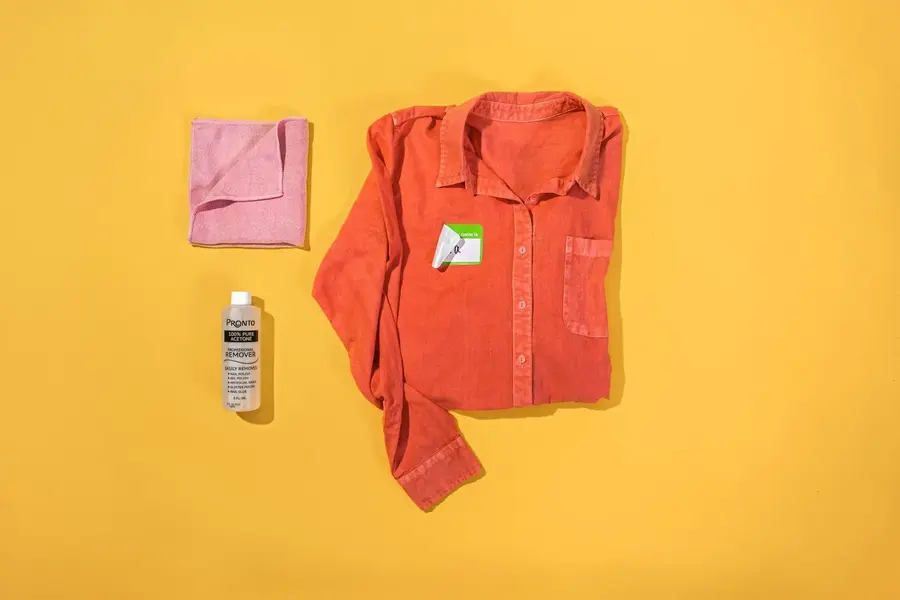
It can be frustrating to remove the sticker residue on clothes, particularly when it leaves behind a sticky spot that collects lint and dirt. Have you ever wondered How Do You remove Sticker Residue Clothing? You are not the only one. This is a very frequent occurrence when labels, price tags or decals adhere too tightly to fabric and even after removing them, the remains of glue are left behind.
The upside of this is that you do not have to use costly products or professional cleaning in order to fix it. All you need is patience and the right method, which will help you put your clothes back in its original state. The trick is the kind of fabric one is handling and to select an approach that will not leave the residue without harming it.
Why Stickers Residue Sticks to Cloth
Sticker residue is made to be sticky and this is the reason why it may not be easy to get it off. The majority of stickers are attached with pressure-sensitive glues that stick to surfaces, including fabric fibers. After removing a sticker, the upper most layer can be taken off easily, but the glue tends to remain.
The residue can be even more difficult to remove by heat, pressure and time. To illustrate, when a clothes garment has been washed or dried with the residue remaining, the adhesive can be fixed more deeply in the fibers. That is why the faster the action is taken, the easier it is to remove it.
Different fabrics react differently as well. Cotton and denim will be more forgiving, whereas delicate fabrics, such as silk or wool, will need additional attention. Becoming familiar with your type of fabric will enable you to prevent techniques that might result in discolouration or destruction.
Basic Household Techniques that Work
Among the simplest measures that can be taken to address sticker residue is the use of the items that are probably available at home. All these are effective, cheap and safe when applied the right way.
Start with warm water and dish soap. Wet the afflicted area a couple of minutes to soften the adhesive. Next wipe the leftovers off using your fingers or a soft cloth. The procedure is most effective in fresh residue that is yet to set.
Alternatively, one can use white vinegar. Use a little on the sticky area and allow it to dry after a few minutes. The acidic substance aids in dissolving the adhesive and is also easy to wipe. Then wash the fabric using cold water to get rid of the odor.
Rubbing alcohol is very effective also. Put a drop on a cotton ball and squeeze it on the residue. Do not rub too hard and not on sensitive fabric. When the glue begins to fade off wipe it off and launder the garment like normal.
These are easy to use remedies that frequently perform surprisingly well and tend to work when the residue is not too old or in a deep rooted position.
Using Oils and Natural Solutions
Oils would be most useful in cases of stubborn adhesive. These are used by dissolving the sticky bonds, such that the residue can expose itself to the action of the fabric lifting it off.
Typical alternatives are coconut oil, olive oil or baby oil. Use a small amount and apply it to the residue and leave it a few minutes. Then gently rub the area with a cloth or your fingers. You should notice the glue starting to loosen.
Another solution, which is unanticipated yet effective, is peanut butter. Natural oils of peanut butter have the capability to dissolve adhesive. Coat the garment with a thin layer, leave it to dry a little, then carefully dry it with a cloth and then wash.
Although these techniques work well, when they are not washed off, they may leave an oily stain. Procedural: It is advisable to wash subsequently with detergent to ensure that the fabric is properly washed.
Solutions made out of nature are especially applied by people who do not want to spend much money on harsh chemicals yet still attain excellent results.
When Commercial Products should be used
Household techniques prove ineffective at times, particularly when dealing with more stubborn residues or older residues. Commercial adhesive removers can be a good option in such instances.
There are several products available that are designed to be used to remove glue and sticky substances. These are made in a way that they disintegrate adhesives in a short time without ruining the majority of fabrics. Nevertheless, one should carefully read the instructions and check the product on a small, insignificant area in the beginning.
It can also be effective with laundry stain removers. Put the product on the residue and leave it to dry according to the recommended period and then wash the garment. This is a good method when dealing with residues that have undergone the wash cycle.
When you have some delicate or expensive clothes, you may want to go to a professional cleaner. They possess state-of-the-art equipment and technology that are capable of managing sensitive materials safely.
Fabric-Specific Advice that You must be aware of
Not every fabric reacts in the same manner to cleaning procedures hence you need to change your manner of doing things depending on the cloth.
Most methods are safe and effective to cotton and polyester. Such tough fabrics are able to withstand gentle scrubbing and different cleaning agents.
Denim is also pretty strong and thus, it is easier to get rid of the residue without fear of damage. It is safe to employ more powerful approaches such as rubbing alcohol or vinegar.
The more delicate materials such as silk, wool or lace need a lighter hand. Careful of harsh chemicals and over-rubbing. Rather, apply soft solutions and apply the area with care. In doubt, then ensure that you get a professional assistance.
Artificial blends can also act in different ways depending on what they consist of, therefore it is always a good idea to test a small test spot first.
Errors to Shun when Removing
Although it is usually easy to clean stickers, some errors may exacerbate the situation.
One of the mistakes is excessive heat application. Even though heat may at times loosen adhesive, it may also make the adhesive deeper in the fabric, and therefore difficult to remove in the future.
The other error is being overly aggressive when scrubbing. This may tear the fibers, and the fabric will wear out or get faded. Moving softly is normally more successful and far less harmful.
Another danger is that of not including the patch test. Even ordinary household products will lead to discoloration of some fabrics. Always practice your procedure on an unseen part before working on the open part of the fabric.
Lastly, should not combine different cleaning agents. When mixing such substances as vinegar and some chemicals, it is possible to obtain the undesired reactions and even harm.
Final Thought
Working with sticky residues in clothes does not necessarily have to be a tense situation. As soon as you know how adhesives work and select the appropriate method, this will become quite easier. You may choose homemade solutions such as vinegar and oil or commercial products, but there is always a solution to restore your clothes without damaging them.
The trick lies in responding slowly, handling the cloth tenderly and avoiding rough methods that may cause irreversible damages. Now that you have these tips, you will no longer fear that you will have to throw away your favorite outfits due to any sticker residue left behind by stubborn stickers.
