

When the Prep Work Determines the Outcome
In manufacturing and industrial assembly, a finished product’s quality rarely comes down to a single step. It comes down to every step that happened before the final one. Sheet metal fabrication clearly illustrates that principle. The preparation phase, specifically how holes are created and shaped before fasteners are installed, directly determines whether a fastener holds under load or fails during field use.
Yet this stage is one of the most frequently underestimated parts of production planning. Engineering teams spend considerable time selecting the right fastener for torque resistance, material compatibility, or corrosion requirements, only to run into preventable failures caused by poor hole preparation upstream.
The Round Hole Problem Nobody Talks About
Standard drilling produces round holes. That works fine for round-body fasteners. But for hex-body rivet nuts, a round hole creates a critical weakness: the fastener can spin freely within it under rotational load, breaking the joint integrity entirely.
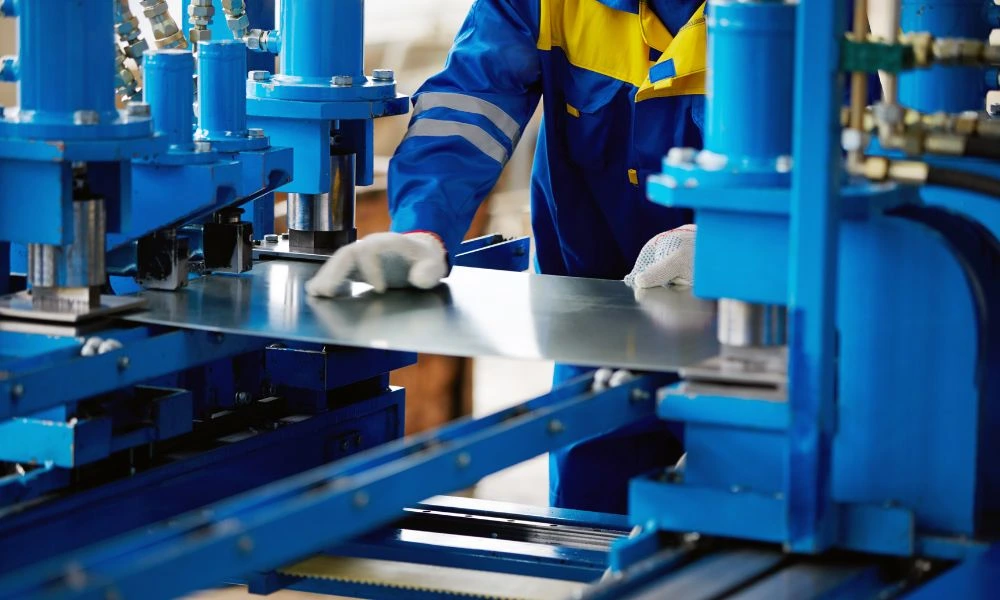
The fix is not complicated, but it requires a deliberate process step. After drilling the round pilot hole, a pneumatic punching tool is used to deform the material and create the hexagonal profile the fastener needs to grip. This secondary operation is where many production setups cut corners, either by skipping it entirely, using the wrong tooling, or setting incorrect air pressure.
The consequences show up later, on the assembly floor or worse, in the field.
Where Tooling Choices Become a Business Decision
For low-to-medium production volumes, a handheld pneumatic tool handles hex hole cutting effectively. It gives fabricators direct control, works with a range of thread sizes, and does not require a major capital investment. For high-volume environments, CNC laser cutting or machining centers take over because the throughput demands make manual tooling inefficient.
Understanding where your production volume sits on that spectrum is not just a technical call. It affects cycle time, labor cost, scrap rate, and quality consistency. Shops that try to use handheld tooling beyond its intended capacity often see increased tool wear, inconsistent hole geometry, and fitment issues that slow downstream assembly.
The Hex Cutter Tool category fills a specific and legitimate niche. Choosing it when it fits the volume profile delivers reliable results. Forcing it into a role it was not built for creates exactly the kind of bottleneck that kills production efficiency.
Material Type Is Not a Detail
One variable that often gets treated as an afterthought is the fastener material itself. Aluminum fasteners require less force to install than steel, and stainless steel requires the most. Each change how the tooling must be set up, including air pressure calibration and mandrel selection.
Failing to account for material hardness causes two common problems. The first is undertorquing, where the tool does not generate enough force to properly form the hex profile, leaving a loose or incomplete cut. The second is overtorquing, which can crack thin sheet metal or damage the tool over time.
Both scenarios produce defects that may not be visible until the fastener is under load. By then, the assembly has already moved further down the line.
Consumables Are Part of the System Cost
Every mandrel and anvil used in hex hole cutting wears out. This is expected and normal. What catches shops off guard is not planning for it.
A production line that runs out of properly sized mandrels stops. There is no workaround. Procurement teams that treat these as incidental purchases rather than scheduled consumables end up paying more in unplanned downtime than they would have spent keeping spares in inventory.
Building a consumables replacement schedule around tool usage rates is a straightforward operational improvement with a direct impact on throughput and cost control.
Precision at the Prep Stage Protects the Whole Assembly
Manufacturing quality is built from the beginning, not inspected in at the end. When hex hole preparation is treated as a precision step rather than a quick pass-through, the fastener performs as specified, the joint holds under real-world conditions, and rework costs drop. That outcome starts with matching the right tooling to the right application, understanding material variables, and keeping the process consistent from the first hole to the last.
