

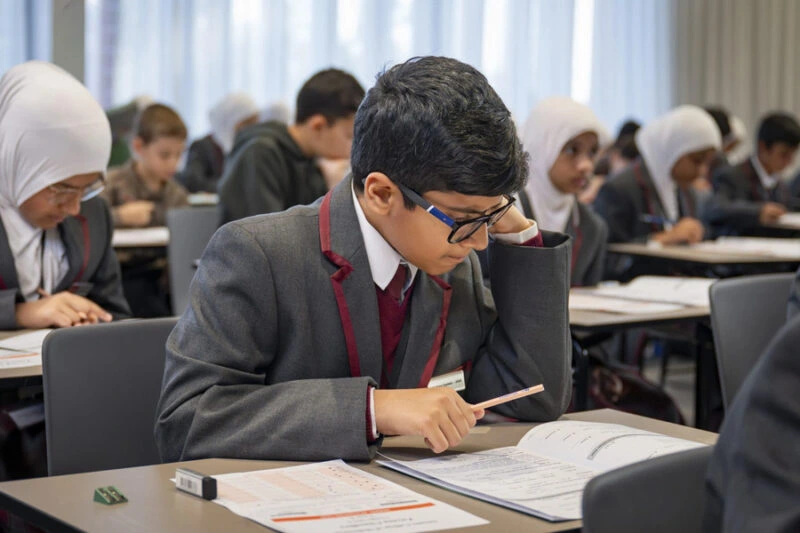
Picking a school is a big decision. Parents ask a lot of questions before they sign up. What does a normal day actually look like? Islamic private schools in Melbourne follow the exact same Victorian curriculum as any other school in the state. Maths, science, English, and VCE subjects sit on the timetable just like anywhere else. Religious studies, Quran memorisation, and Arabic classes get added on top, not swapped in instead. That means kids graduate with the same qualifications as their peers down the road. Here is what a typical school week actually looks like once you step past the front gate.
A Normal Day, Hour by Hour
| Time | What Happens |
| 8:30am | Assembly and a short Quran recitation |
| 9:00am to 12:30pm | Core subjects: English, maths, science |
| 12:30pm | Dhuhr prayer break, roughly 20 minutes |
| 1:00pm to 3:00pm | Humanities, electives, Arabic or Islamic studies |
| 3:15pm | Dismissal or after school programs |
Where the Curriculum Actually Comes From
None of this gets invented on the spot. Schools like Ilim College in Dallas follow VCAA guidelines, the same body that sets rules for every government school in Victoria. Teachers hold VIT registration, which stands for the Victorian Institute of Teaching. That’s not optional, it’s the law. So when people ask if an Islamic school counts as a real school, the honest answer is it’s about as real as it gets on paper. The difference sits in the extra hour of the day, not in the missing one.
Daily Life Outside the Textbook
- Boys and girls often study on separate campuses or in separate wings after primary years
- Friday Jummah prayer usually replaces a normal lunch break once a week
- Ramadan brings shorter school days and adjusted sport schedules
- Eid celebrations shut the whole school down for a proper holiday, not a half day
None of this slows down the academic pace at all. If anything, the fixed prayer breaks give kids a built in reset button during a long school day. A ten minute pause does more for a tired brain than another worksheet ever could, and most parents notice that change at home by the second term.
Extracurricular Life and the Wider Community
School doesn’t stop at 3:15pm for most kids, and Islamic private schools lean into that reality rather than ignoring it. Sports carnivals, debating teams, and science fairs run exactly like they do anywhere else in Victoria. On top of that, many schools run Quran competitions, Arabic calligraphy clubs, and charity fundraisers tied to the Islamic calendar. Parent associations often organise community iftars during Ramadan, turning the school into more than just a building kids pass through on weekdays. Over 31 percent of Australia’s Muslim population already lives in Greater Melbourne, so these schools sit at the centre of a genuinely large and tightly connected community rather than operating on the margins.
Transport and location matter too, and most families underestimate how much a long commute wears a kid down over a full school year. Check bus routes before you fall in love with a prospectus, because a forty minute drive each way adds up to real exhaustion by Term 3.
Fees sit lower than most mainstream private schools, usually somewhere between $3,000 and $4,500 a year rather than the $15,000 or more charged elsewhere in Victoria. That gap comes from a mix of government funding tied to a school’s socio educational profile and a simpler operating model overall. Lower fees never mean a watered down curriculum here. They just mean fewer marble foyers and a sharper focus on the classroom itself.
