

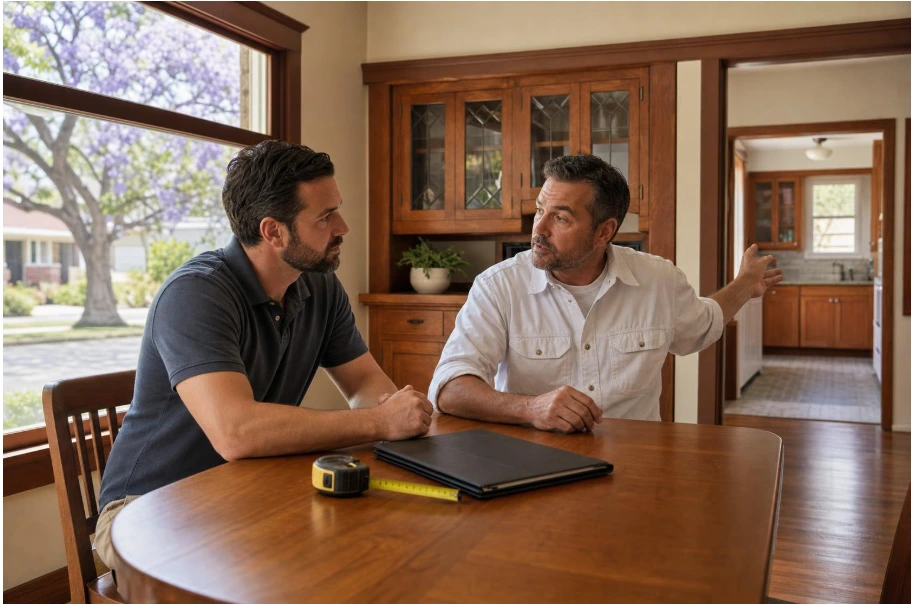
Three bids arrive for the same kitchen-and-bath remodel in a 1926 Craftsman in Floral Park. Two are within a few thousand dollars of each other. The third is forty percent lower, comes with a cheerful text message instead of a written scope, and asks for half the money up front to lock in material prices.
The low bid is the one most homeowners want to believe. It is also the one that generates most of the complaints filed with the state licensing board every year: abandoned jobs, unpermitted work discovered at resale, subcontractors filing liens on a house whose owner already paid. Vetting a contractor is not about distrust; it is a fifteen-minute routine that separates a business from a phone number. Here is the routine, in order.
Step 1: Run the CSLB check, then confirm the bond and insurance
Every contractor working on a California home above a small dollar threshold must hold a license from the Contractors State License Board. Ask for the license number and the exact name on it, then look it up on the board’s website yourself rather than accepting a screenshot.
Check five things. The license must be active, not suspended or expired. The classification must fit the work: a general building contractor holds a B license, and a remodel that touches framing, plumbing and electrical is B-license work. The business name on the license must match the name on the bid. The personnel section shows who actually qualifies the license, which matters if the person you met is not on it. And the complaint disclosure and any citations tell you how the business behaves when things go wrong.
The same record shows whether a contractor bond and workers’ compensation policy are on file. The bond is a legal minimum of $25,000, which sounds reassuring until you compare it to a whole-house remodel; treat it as a floor, not a safety net. Ask for a certificate of general liability insurance issued to you by the insurer, and call the agent to confirm it is current. A contractor claiming to have no employees while arriving with a crew of four is telling you something.
Step 2: Read the contract like an inspector
California requires a written home improvement contract with specific contents: a detailed description of the work and materials, the contract price, approximate start and completion dates, a schedule of progress payments, and a notice of your right to cancel within three business days. If those items are missing, the contract is not compliant and the contractor knows it.
Add the things the law does not require but experience does. Permits should be pulled in the contractor’s name, not yours. Change orders should be written, priced and signed before the work happens. Allowances for tile, fixtures and appliances should be listed by amount so you can see whether the bid assumed builder-grade or something better. A general contractor in Santa Ana who works on the city’s older housing will also include a line for unforeseen conditions, because opening a ninety-year-old wall almost always reveals something.
Step 3: Set a payment schedule that protects both sides
The schedule is where good contractors and bad ones diverge most clearly. A compliant, sensible schedule follows these rules:
- The down payment may not exceed ten percent of the contract price or $1,000, whichever is less
- Each progress payment corresponds to a completed, inspectable stage such as demolition, rough-in or drywall
- No payment is ever made ahead of the work it covers
- A conditional lien release from the contractor and major subcontractors accompanies each payment
- The final payment waits for the final inspection and the signed permit card
A contractor who explains this schedule before you ask is one who has run it many times. If the remodel is one phase of a larger plan, the schedule should also reflect the sequence, a subject covered well in this guide to planning a whole-home remodel and worth reading before the first payment.
Santa Ana realities: old houses, permits and the lowball bid
Santa Ana’s housing stock is older than most of the region: Craftsman bungalows and Spanish Revival houses in the historic districts, 1940s and 1950s tracts across the south and west, and a great many unpermitted additions and garage conversions from decades past. A bid that does not mention the possibility of knob-and-tube wiring, galvanized plumbing or an undocumented bedroom has not looked closely.
Permits run through the city’s Planning and Building Agency, and properties in the historic districts can face additional design review for exterior changes. That process takes time, and the lowball bid is usually low because it assumes no permit, no inspection and no allowance for what the walls contain. Established firms, Primework Construction among them, price those realities into the bid up front, which is why their number is rarely the lowest on the table and why it is usually closest to what the project actually costs.
Quick answers
What if the contractor asks for cash?
Decline, and pay every installment by check or card so there is a record tied to the contract.
Can I check the subcontractors too?
Yes; electricians and plumbers on the job must hold their own licenses, and the same board lookup works for them.
Is a three-day cancellation window really enforceable?
It is a state requirement for home improvement contracts, and a contractor who leaves it out of the paperwork has already broken one rule.
Primework Construction
901 W Civic Center Dr Unit 4021, Santa Ana, CA 92703
Phone: 714-694-2172
Website: primeworkconstructionca.com/santa-ana
